
Making Shared Travel More Predictable
Exploring how BlaBlaCar could make shared travel feel more predictable without removing host flexibility.
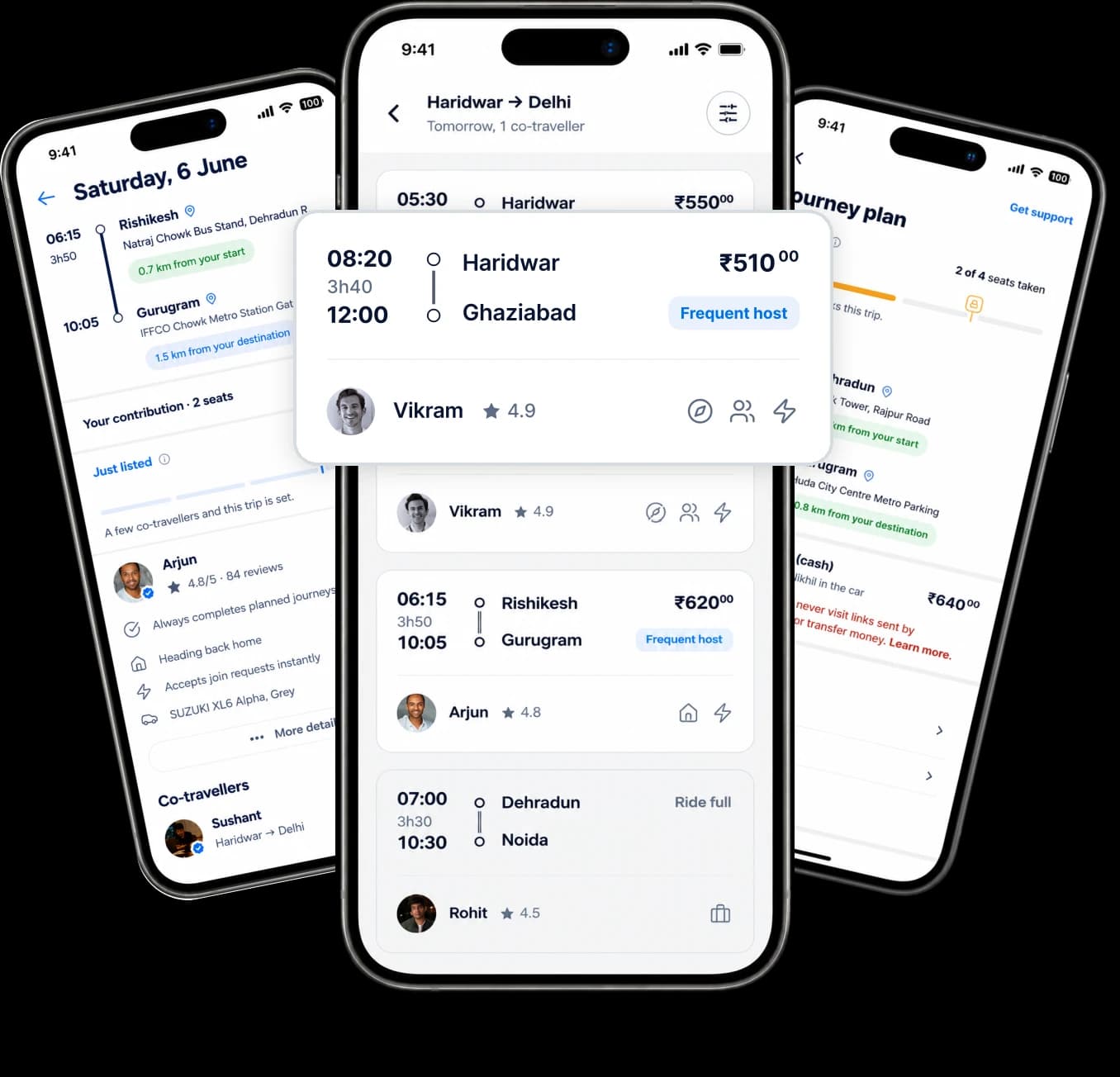
Platform
BlaBlaCar India is a peer-to-peer intercity carpool app. Unlike Ola or Uber, it holds zero money, riders pay hosts directly in cash or UPI. The platform earns nothing per transaction.
Constraint
The standard fix, charge a cancellation fee but it was structurally impossible. No escrow. No wallet. No financial lever. The design had to work without money. This constraint helped me thinking in interesting solutions.
Features
Trip viability meter: shows economic health of the trip in real time On-Route Chips: Decreases the coordination regarding the pickups & drop offs Badge & Intent Chips: Introduces new trust signals for the riders. Peer language : reframes the host identity from driver to Route Host
Crack
The platform confirmed a booking without confirming the conditions that make a trip actually happen. Toll math invisible. Expectations mismatched. Coordination outsourced to strangers.
Approach
Three levers: information, logistics, time. Six problem clusters. 20+ variants. 4 prototyped features. An AI-assisted workflow made it possible to go wide and deep simultaneously as a solo designer.
The Signal 9 Mixed Participants
All 9 participants preferred seeing trip viability meter upfront. 7 of 9 found the On Route map clearer than phone coordination. (2 still preferred phone calls 🥺) Participants appreciated knowing they had a fallback plan if their original ride became unreliable. 2 Stills needs human touch to fell more confident on rides.
Note : This is a concept project. Based on my personal experience, 500+ 1 Star Reviews on Google Play, and 9 Participants including both users of the app. No code was shipped. All validation was qualitative.
BlaBlaCar lets strangers share long trips by filling empty seats affordably.
I've been using BlaBlaCar for years as both a rider and a host. The more I used it, the more I noticed a gap between what the app communicated and what was actually happening behind the scenes.
A booking could be approved, yet the trip could still be uncertain. Seeing that gap repeatedly and experiencing it myself made me want to understand where trust was breaking down. That's where this project began.
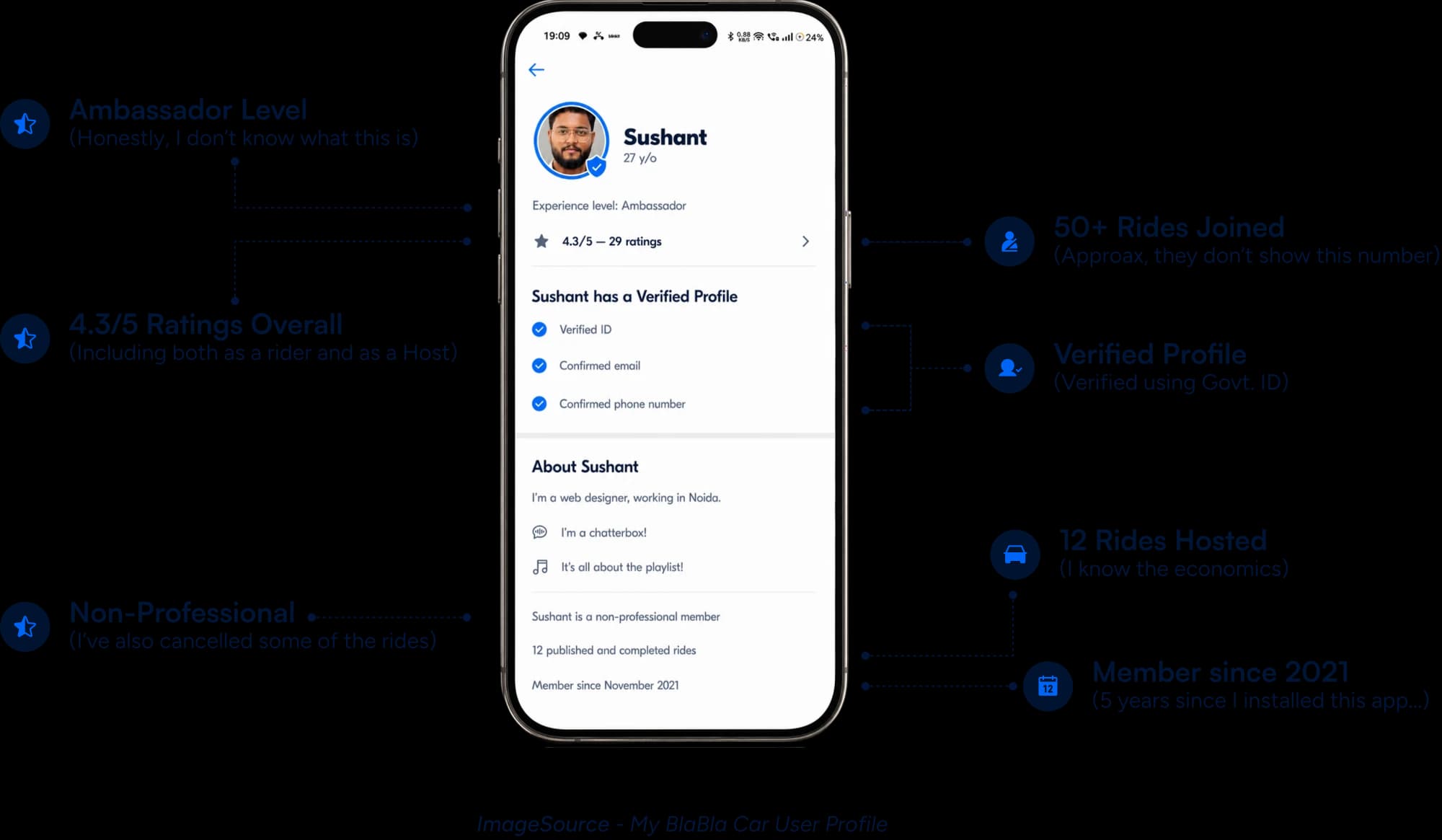
The reviews blamed hosts.The research didn't.
As a host, I believed cancellations weren't always due to bad behavior. After reviewing 500+ reviews and speaking with riders and hosts, I found most cancellations happened because of incomplete information. Trips were approved despite factors like occupancy, coordination and changing plans, making all rides seem equally reliable, which broke trust.
“The cancellation wasn't always the worst part. Not knowing it was coming was.”— Recurring finding across 7 of 9 interviews
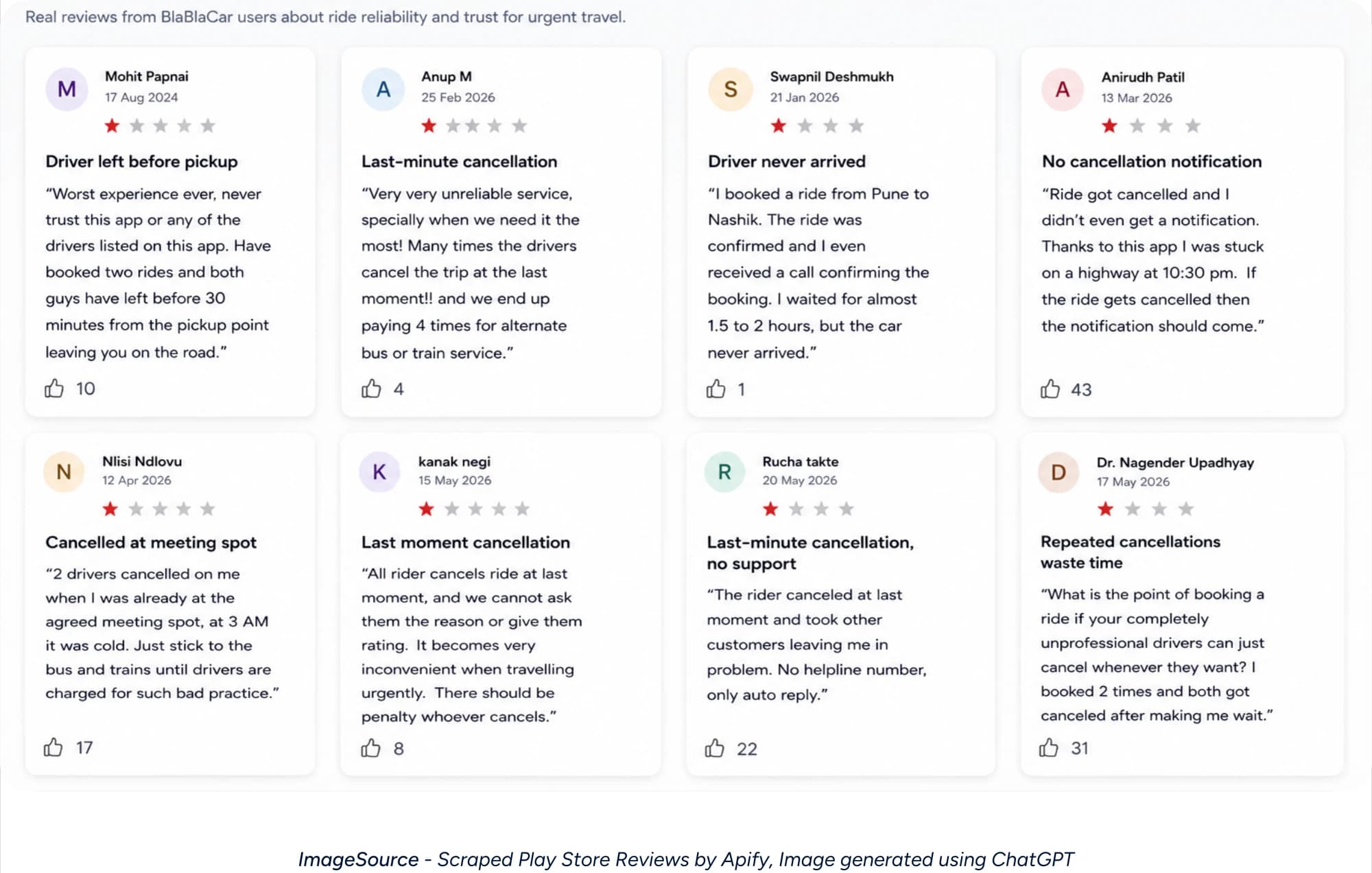
Economic Viability
One booked seat rarely covered fuel, making cancellation the easiest option.
Expectation Gap
Riders expected taxi flexibility, while hosts were just daily commuters.
Coordination Burden
Approving bookings was simple, but pickup coordination required endless calls.
Hidden Uncertainty
Not every approved ride was reliable, yet they all looked identical.
Frames hosts as drivers, initiating a taxi mindset early.
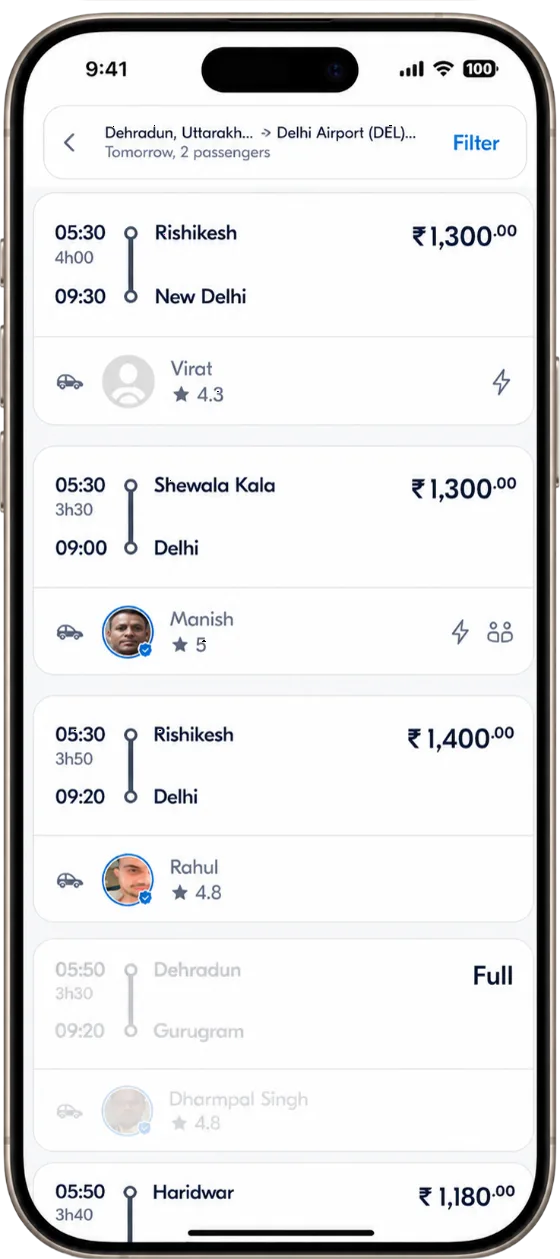
Every ride looks equally reliable despite different cancel risks.
Fails to show he is a commuter, not a professional driver.
A confirmed booking is not a guarantee of a completed ride.
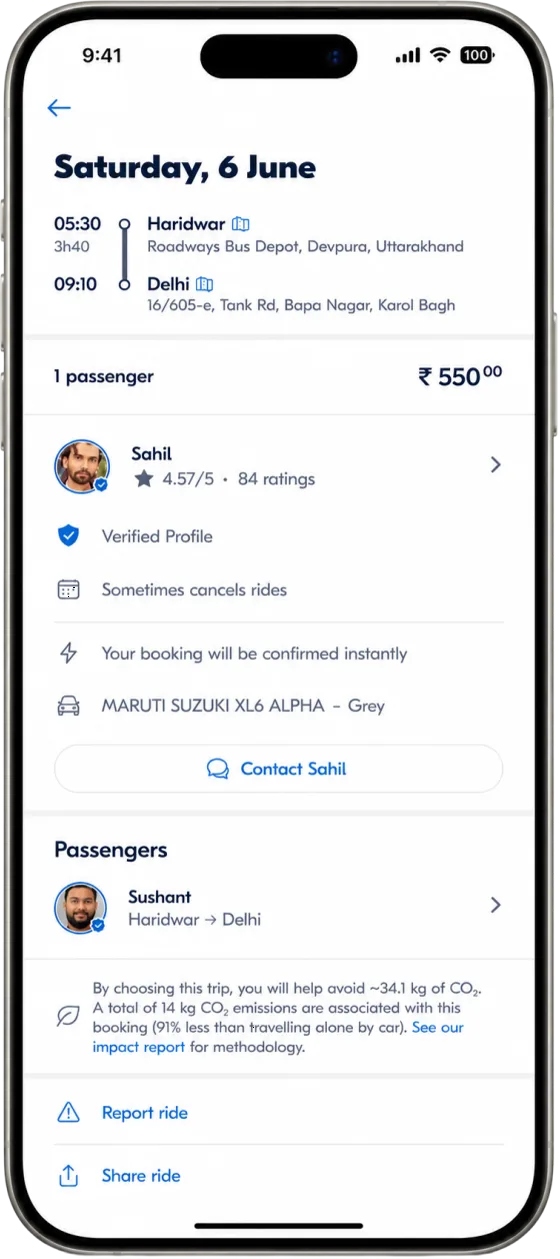
A single call button is the entire coordination system.
Hides whether enough seats are filled to run the trip.
Implies a guarantee for a seat that is not actually secured.
Pre-filled text frames a shared commute as a service.
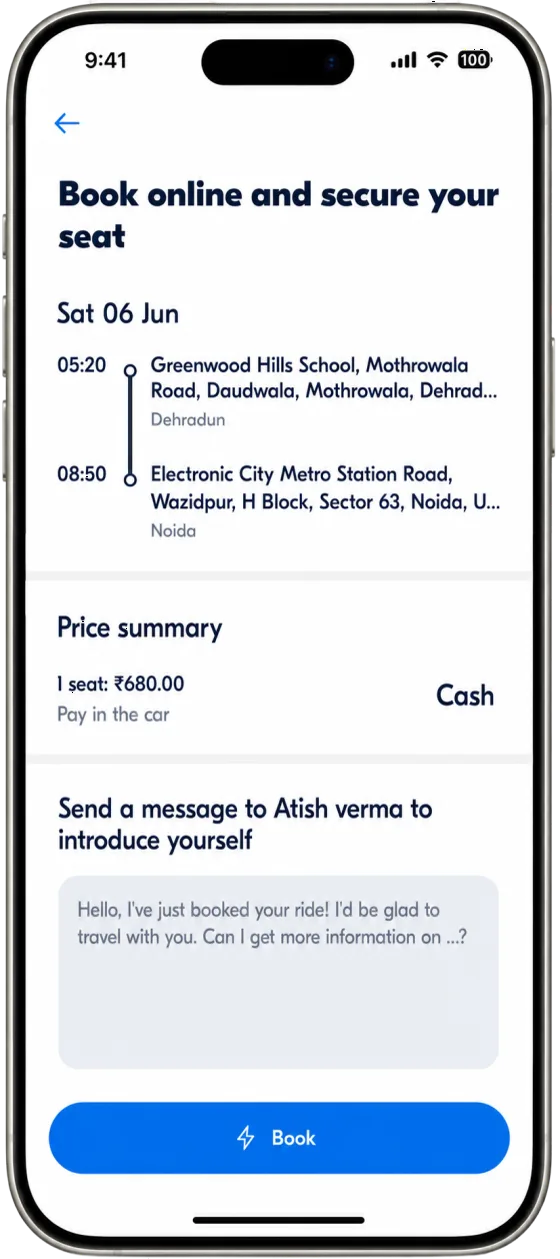
A giant checkmark celebrates a guarantee the system cannot make.
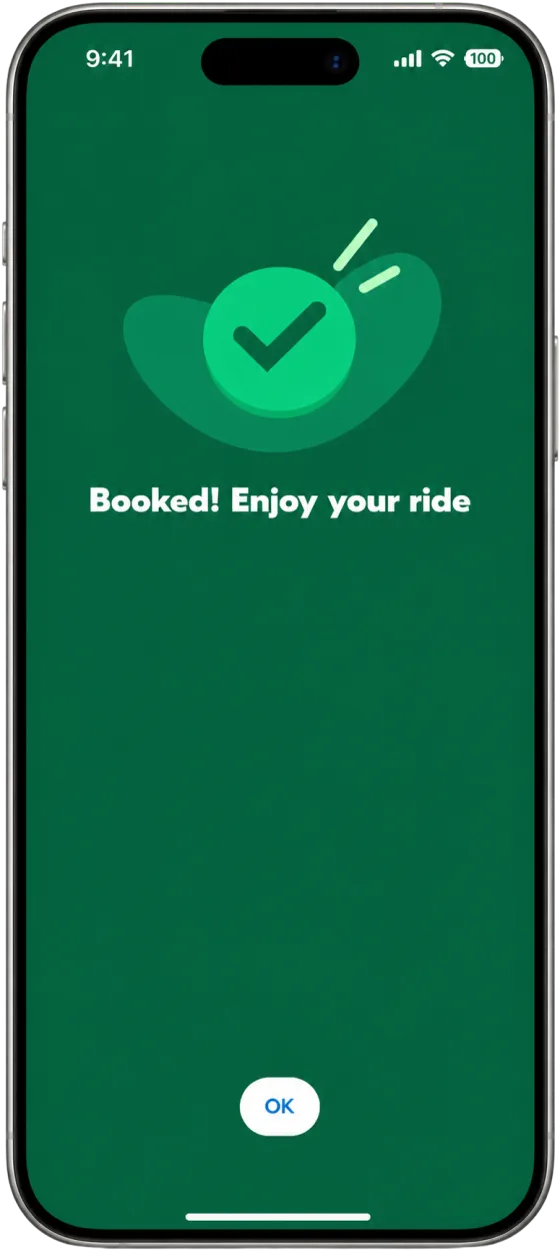
App let's rider to think about What's next
Calling the host a driver reinforces the taxi framing.
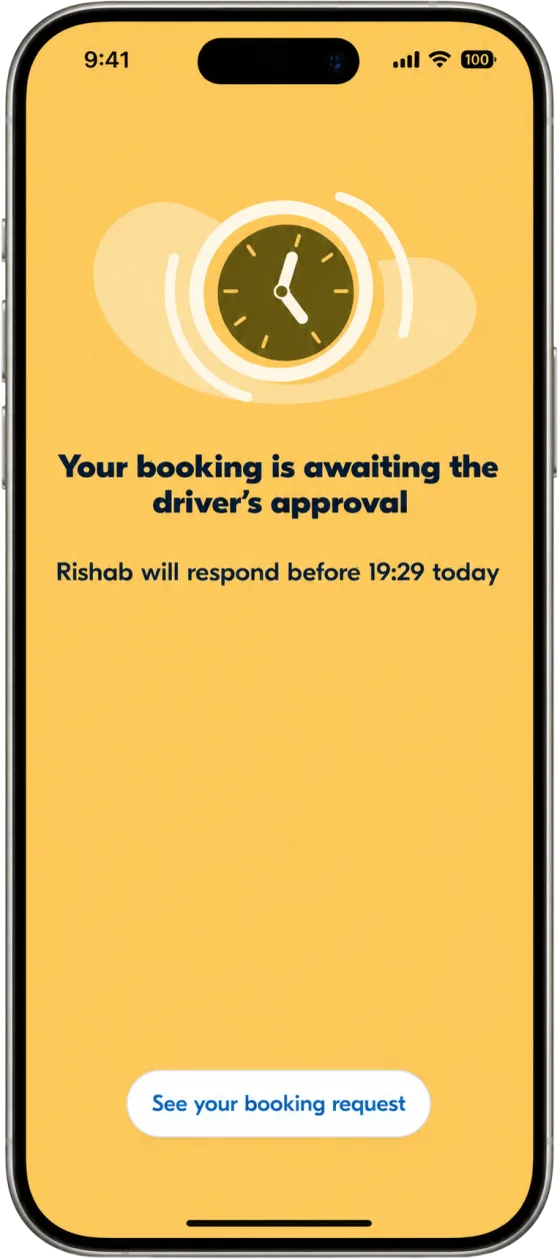
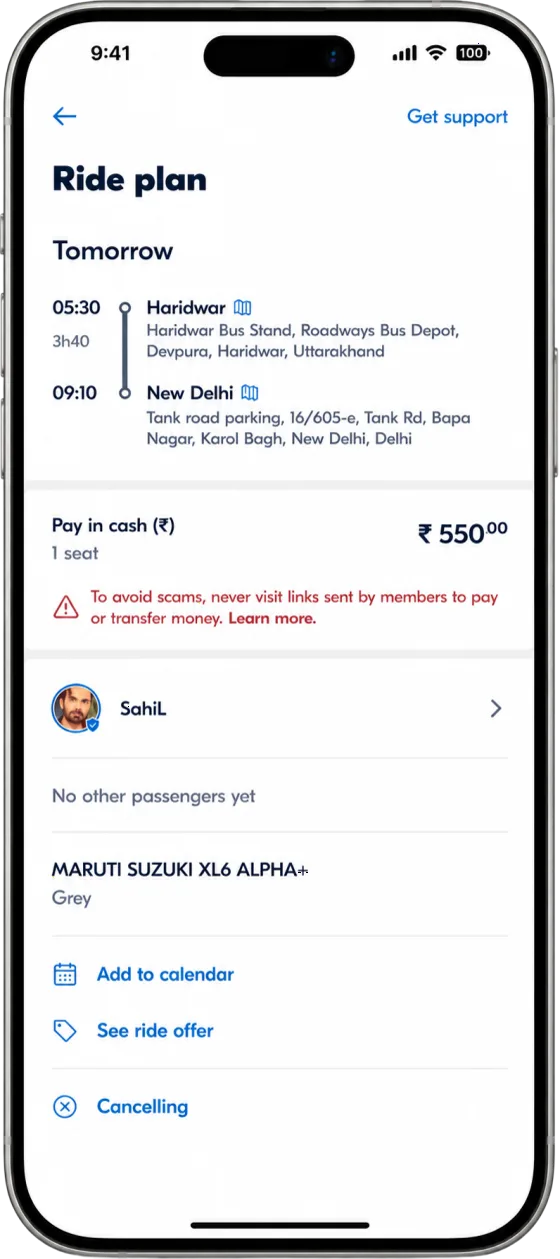
Offers no live status, pickup pin, or real coordination tools.
Replacing uncertainty with honest, upfront expectations.
Three things the platform could do differently
- Reveal trip viability: Showing whether trip is economically viable before riders book, not just the number of seats filled.
- Reframe the relationship: Hosts and riders aren't service provider and customer. They're co-travelers who happen to be sharing a car.
- Handle the coordination layer: Meet-up point, route deviation, check-in window. So two strangers don't have to figure it out on WhatsApp/ Call
Where the road ended.
Many ideas looked promising until they met the realities of the platform.
- 01
A profit is illegal on private plate. Carpooling is cost-share only.
- 02
The platform hold ₹0. Cash in the car, nothing to leverage.
- 03
Anyone can walk free. No penalty, no lock-in.
Going wide and deep at the same time.
“The hard part wasn't finding ideas. It was deciding which ones the product could honestly carry.”
I had four clear problems from research but no obvious fix, so instead of running with my first idea I tried a lot of directions, money, trust, coordination, recovery. Most didn't survive BlaBlaCar's constraints. AI made exploring fast; deciding what was worth building was the hard part. The table shows what I kept, dropped, or parked, and why.
20+ directions, narrowed to what the product could carry
discarded
triage
| SOLUTION AREA | WHAT I EXPLORED | OUTCOME | VERDICT |
|---|---|---|---|
| Financial & Regulatory | Fines, escrow, reliability bonds, commitment premium | All required holding money or behaving like a taxi platform — structurally impossible with zero escrow. | Discarded |
| Accountability | Shadowbans, KYC, host status taps | Added friction or depended on manual upkeep that quickly goes stale. | Discarded |
| Recovery | Auto-release, standby rides, auto-transfer, host status update | Needed a route density most corridors don't have, and relied on a single manual update from the host. | Parked |
| Expectation & Certainty | Viability signals, progress indicators, booking states | Trip Lock and a cohesive Locked-in status let riders read uncertainty earlier — derived passively, no host activity required. | Finalized |
| Coordination | Route checks, pickup rules, detour controls | On-route distance chips were designed and tested; rule-based pickup controls were dropped. | Partial |
| Language & Identity | Host framing, intent tags, commuter badges, reputation signals | Route Host framing and intent tags were prototyped; badges and scoring were dropped. | Partial |
Seeing when a ride is worth the drive.
A live viability meter, seat fill, lock point, and all, so riders read a trip's odds at a glance and choose with confidence.
One less reason to call.
Most pre & post trip calls are just "Is my stop on your way?" The map answers it, so the question never has to leave the screen.
Using Turf.jsKnow who you're riding with.
Hosts used to look identical. A Frequent host badge shows who's a regular on the route, an intent icon shows why they're driving. Enough to trust a host at a glance, and to see a commuter, not a cab.
Carpool, not Cab.
Every word that sounded like a taxi got retired. Driver became host, passenger became co-traveller, the fare became a cost to share.
You just scrolled through 4,200px of design.
a friendly wager
Beat me at tic-tac-toe and there will be no salary negotiations.
You're X. Make your move.